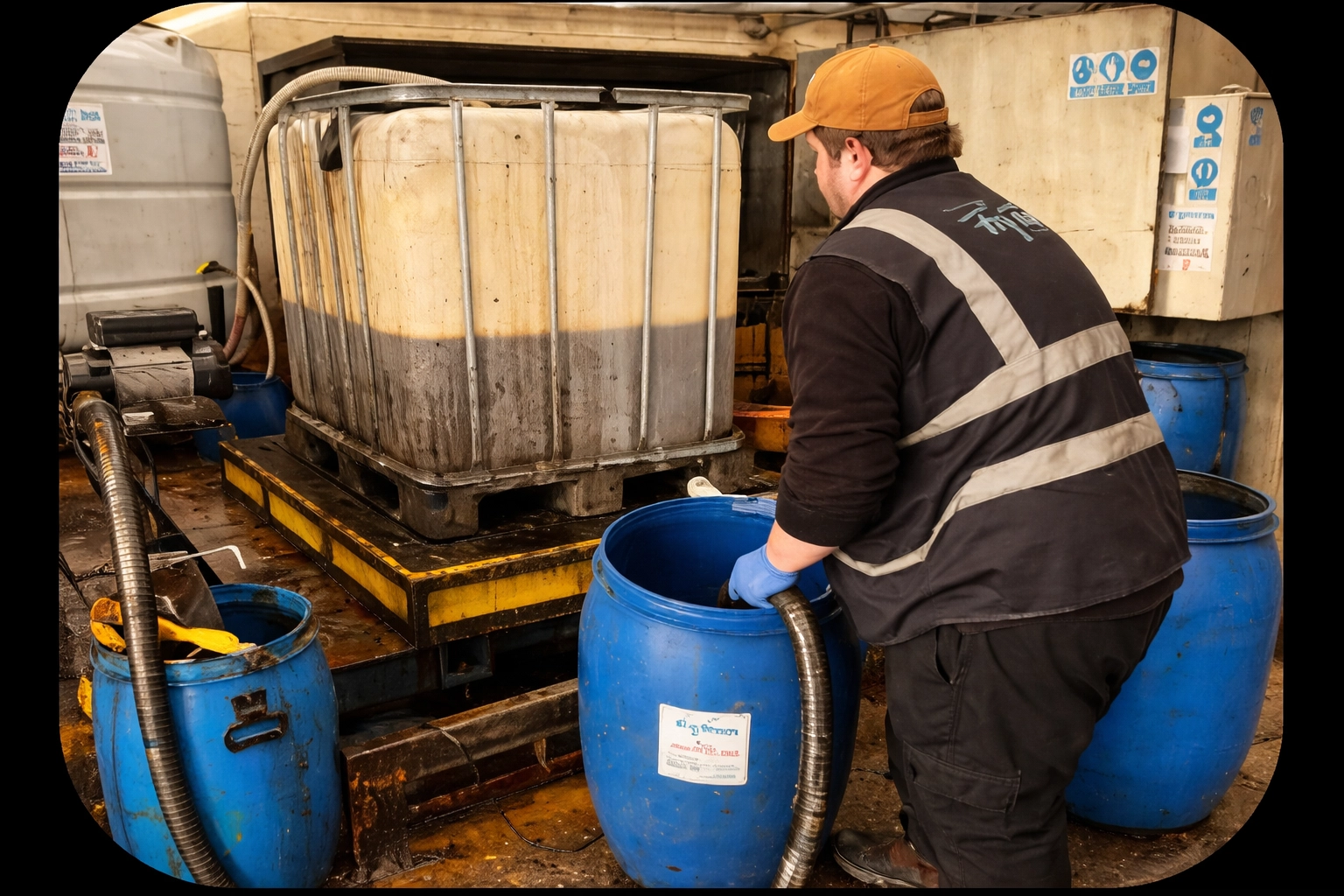
If you run a commercial kitchen, you already know that waste cooking oil collection isn’t just a nice-to-have, it’s essential. But with so many providers out there, how do you know what to look for? And what are your actual legal responsibilities?
Whether you’re a chip shop in Chester, a hotel kitchen in Liverpool, or a café in Manchester, here are 10 things every food business should know about used cooking oil collection and disposal.
1. Proper Cooking Oil Disposal Is a Legal Requirement
Let’s start with the big one. In the UK, businesses have a legal duty of care when it comes to waste disposal, and that includes your used cooking oil.
Pouring it down the drain? Absolutely not allowed. It damages sewage systems, causes fatbergs, and can land you with hefty fines from your local water authority.
You’re required to store, handle, and dispose of waste oil responsibly. That means working with a licensed waste oil collection service that can provide the proper documentation.
2. Waste Transfer Notes Are Non-Negotiable
Every time your waste cooking oil is collected, you should receive a Waste Transfer Note (WTN). This document proves that your oil has been handed over to a licensed carrier and disposed of legally.
Keep these on file for at least two years. If environmental health or trading standards come knocking, you’ll need to show them.
A reputable used cooking oil collection provider will handle this paperwork automatically, so you don’t have to chase it.
3. ISCC Certification Matters More Than You Think
Here’s something many businesses overlook: ISCC certification.
ISCC stands for International Sustainability and Carbon Certification. It’s a global standard that ensures waste cooking oil is tracked, traceable, and processed sustainably, right through to becoming biofuel.
When you choose an ISCC-certified collector, you’re guaranteeing your oil enters a legitimate, sustainable supply chain. It also protects you from accidentally contributing to fraud in the biofuels industry (yes, it happens).
At Fry Fresh, we’re proud to be fully ISCC certified. You can read more about our commitment to sustainability and quality.
4. You Can Actually Sell Used Cooking Oil
Here’s the good news: your waste oil has value.
That’s right: you can sell used cooking oil rather than paying someone to take it away. Quality used cooking oil (sometimes called “yellow grease”) is in high demand for biodiesel production, sustainable aviation fuel, and other renewable energy applications.
The price varies depending on market conditions and oil quality, but working with a reliable collector means you could turn a waste stream into a small revenue stream.
5. Proper Storage Keeps Your Kitchen Compliant
Before collection day, your used cooking oil needs to be stored safely. That means:
- Dedicated containers away from food prep areas
- Secure lids to prevent spills and contamination
- Clear labelling so everyone knows what’s inside
- Easy access for collection vehicles
Many waste cooking oil recycling providers supply containers as part of their service. It’s worth asking what’s included: some offer drums, others provide larger tanks depending on your output.
6. Regular Collection Prevents Problems
How often should you schedule cooking oil disposal? It depends on your kitchen’s output.
A busy fish and chip shop might need weekly collection. A small café might only need it monthly. The key is not to let oil sit around too long: it can degrade, smell, and attract pests.
A good collector will work with you to set up a schedule that fits your needs. At Fry Fresh, we offer flexible collection across the North West, adjusting frequency as your business grows or seasonal demand changes.
7. Your Waste Oil Becomes Renewable Fuel
Ever wondered what actually happens to your oil after collection?
Once collected, used cooking oil goes through a cleaning process: filtration, heating, and separation: to remove food particles and water. The cleaned oil is then sent to refineries where it’s converted into:
- Biodiesel for vehicles
- Renewable diesel
- Sustainable aviation fuel
- Animal feed products
It’s a genuine closed-loop system. Nothing goes to landfill. Your chips from last Friday could literally be powering a delivery van next month.
We’ve recently invested £1.3 million in greener operations to support exactly this kind of circular economy. Read about our investment here.
8. Local Collection Services Save Time and Hassle
When searching for a waste oil collection service, going local has real advantages.
National companies might seem appealing, but local providers typically offer:
- Faster response times when you need an extra collection
- Flexible scheduling that works around your busy periods
- Face-to-face relationships with drivers who know your site
- Lower carbon footprint from shorter transport distances
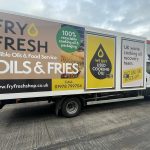
We serve businesses across North Wales, Liverpool, Manchester, Chester, and beyond. Recently, we’ve expanded into Cardiff and the West Midlands too.
9. Documentation Protects Your Business
Beyond Waste Transfer Notes, proper documentation gives you peace of mind.
A professional used cooking oil collection service should provide:
- Collection receipts with dates and volumes
- Carrier licence details (check they’re registered with the Environment Agency)
- ISCC chain of custody records if applicable
- Regular statements showing your environmental contribution
This paperwork isn’t just bureaucracy. It’s your proof of compliance: and increasingly, it’s what customers and auditors want to see.
10. It’s Part of Your Sustainability Story
Here’s the thing: sustainability isn’t just a buzzword anymore. Your customers care about it. Your staff care about it. And frankly, it’s the right thing to do.
Proper waste cooking oil recycling is one of the easiest wins for any food business. You’re:
- Keeping harmful fats out of the water system
- Contributing to renewable energy production
- Reducing your overall carbon footprint
- Meeting your legal obligations
It’s a story worth telling. Mention it on your menu, your website, or your social media. Customers love knowing their local chippy is doing its bit for the planet.
Ready to Sort Your Waste Oil Collection?
Finding the right waste cooking oil collection partner doesn’t have to be complicated. Look for ISCC certification, proper documentation, flexible scheduling, and a team that actually understands food service.
At Fry Fresh, we’ve been supporting kitchens across the North West for years: supplying premium cooking oils and collecting the used stuff when you’re done. It’s a complete, closed-loop service that keeps things simple.
Got questions? Want to set up a collection? Get in touch with us and we’ll sort you out.